 Back to

Natixis CIB Green Summit 2026
The Natixis Green Summit 2026 took place in October at the Pathé Palace in Paris.
The event brought together 750 attendees and 115 speakers, accross 28 sessions, in both technical and interactive formats.
The summit examined how sustainability, once seen as an end goal in itself, now intersects with a reshuffled set of priorities: rearmament, energy supply security, sovereignty, competitiveness, social cohesion, the AI revolution, and the constraints of planetary limits.
Watch the Event Recap
Detailed Program
The Green Summit's Plenary Session
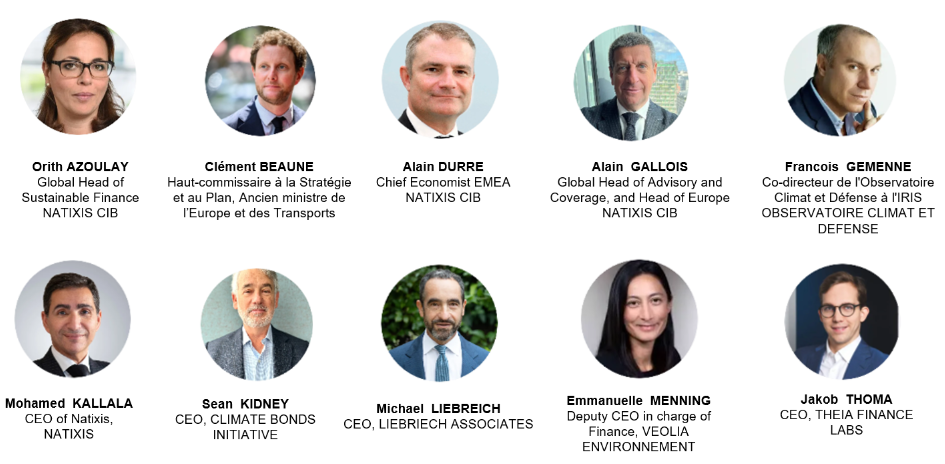
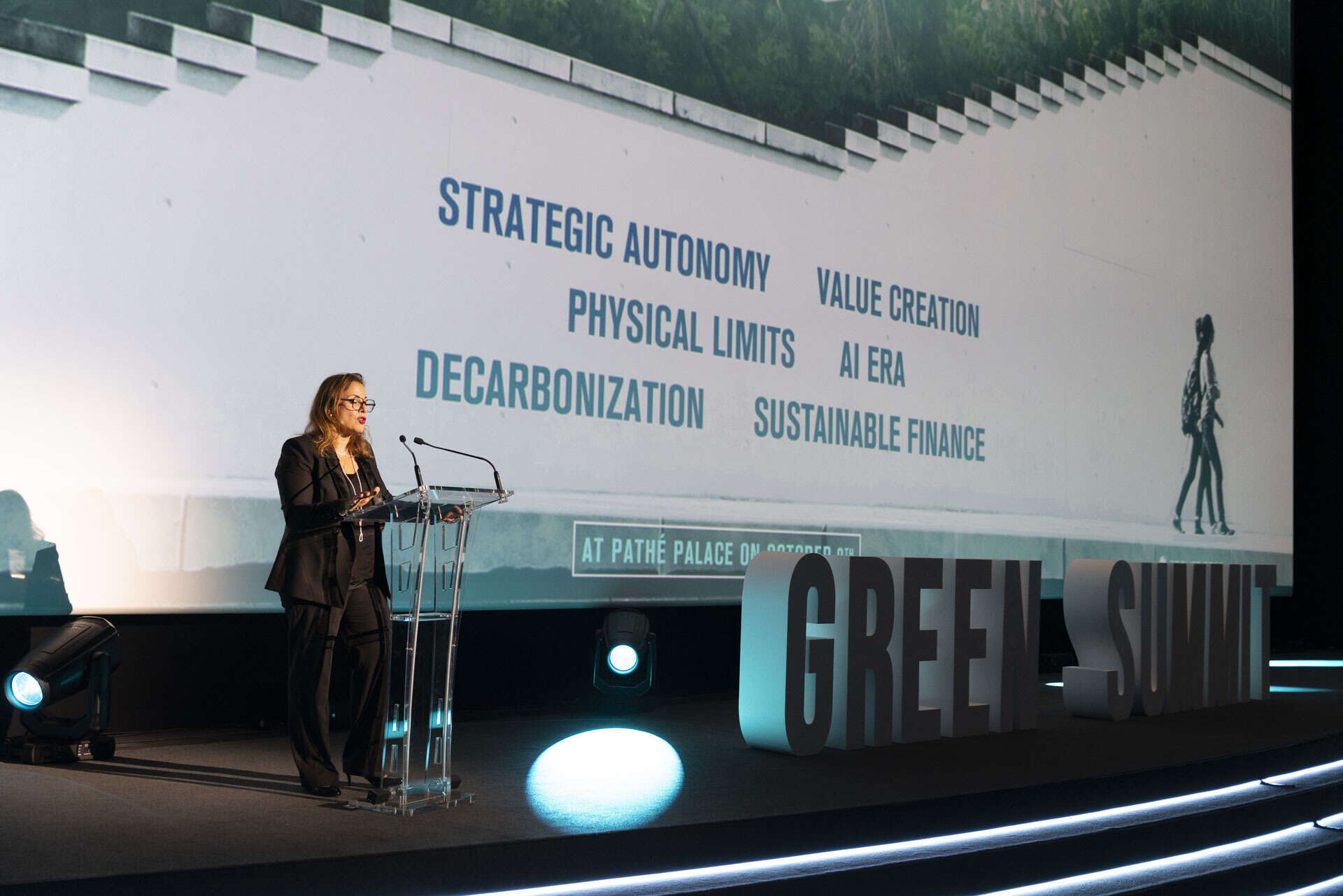
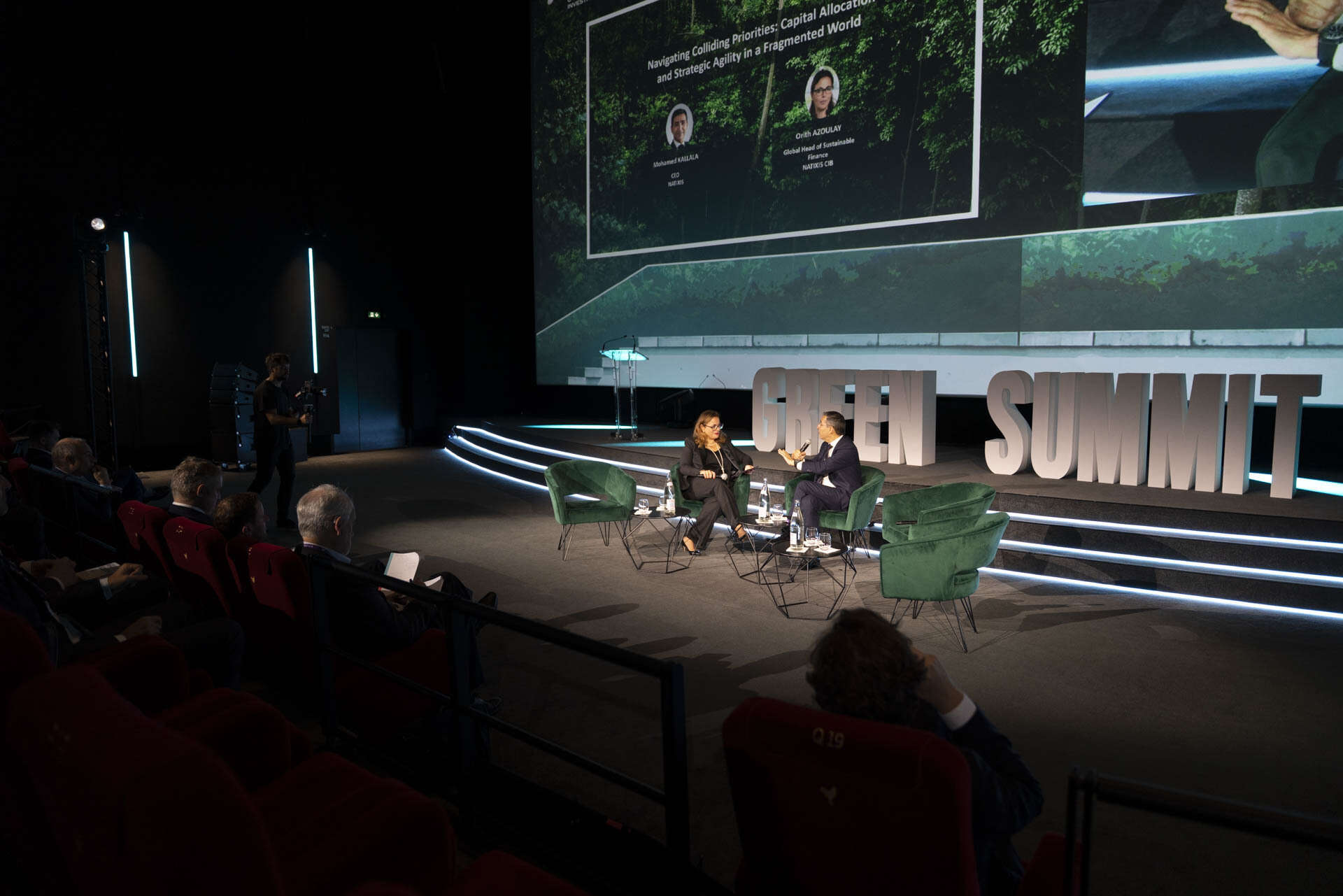
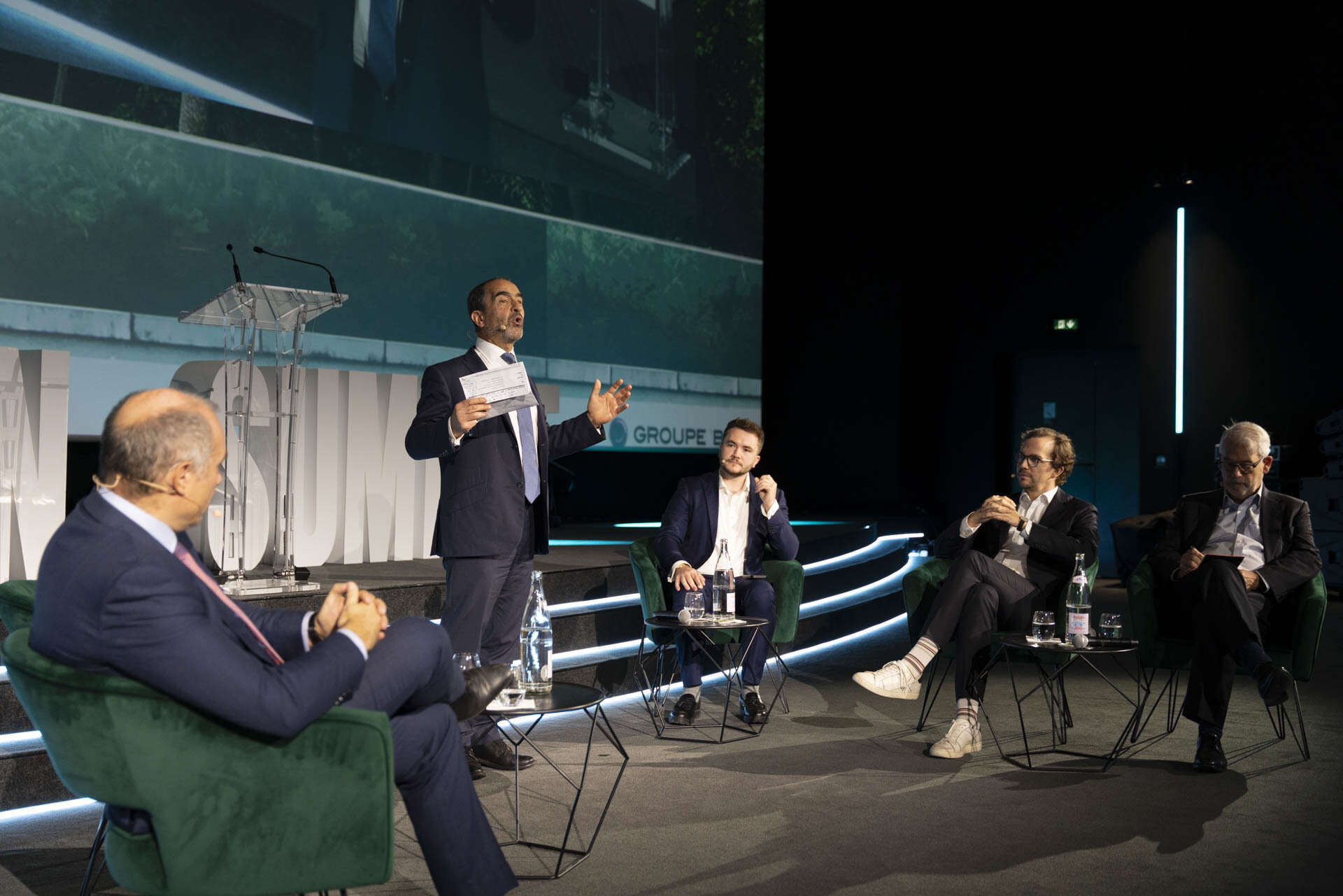
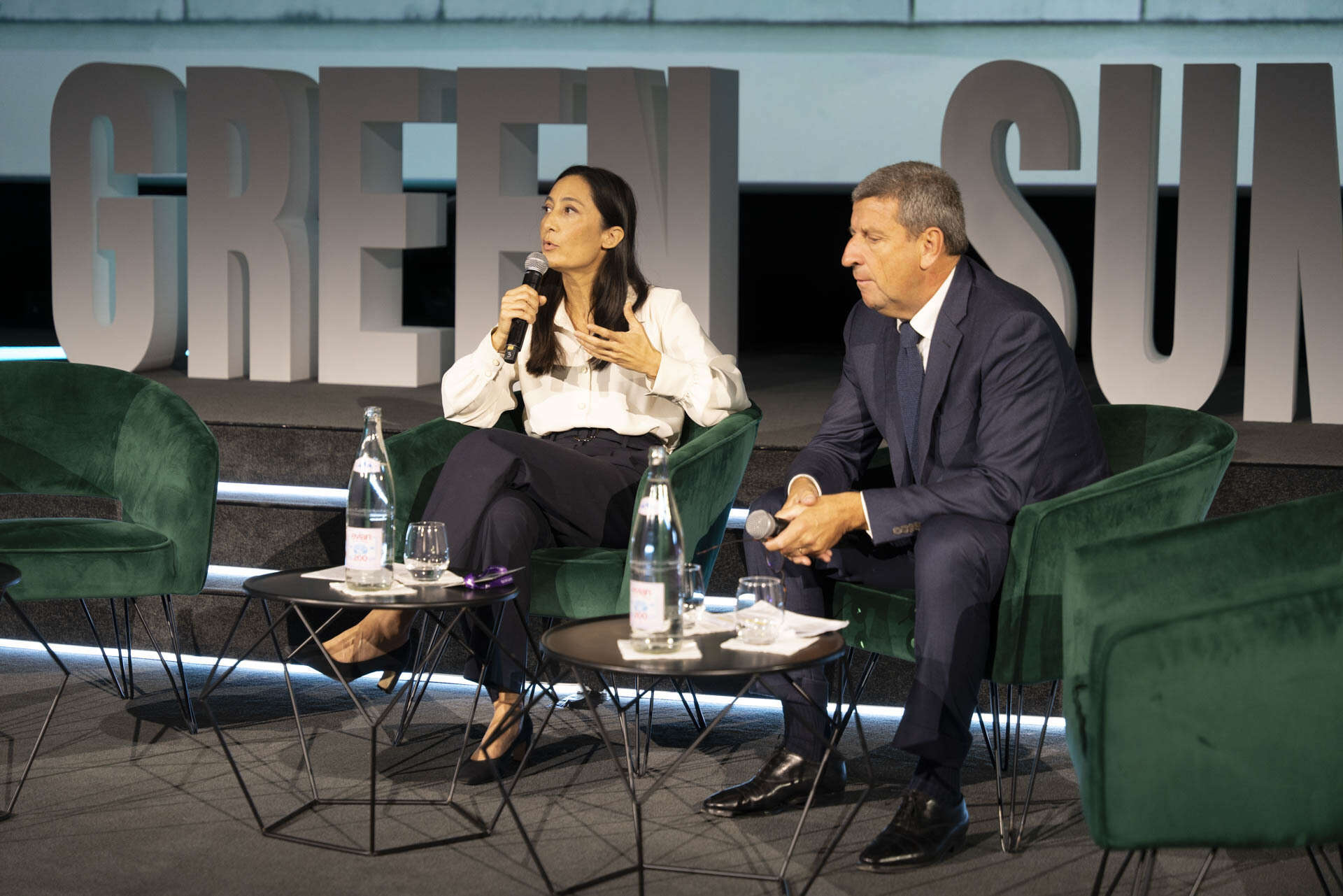
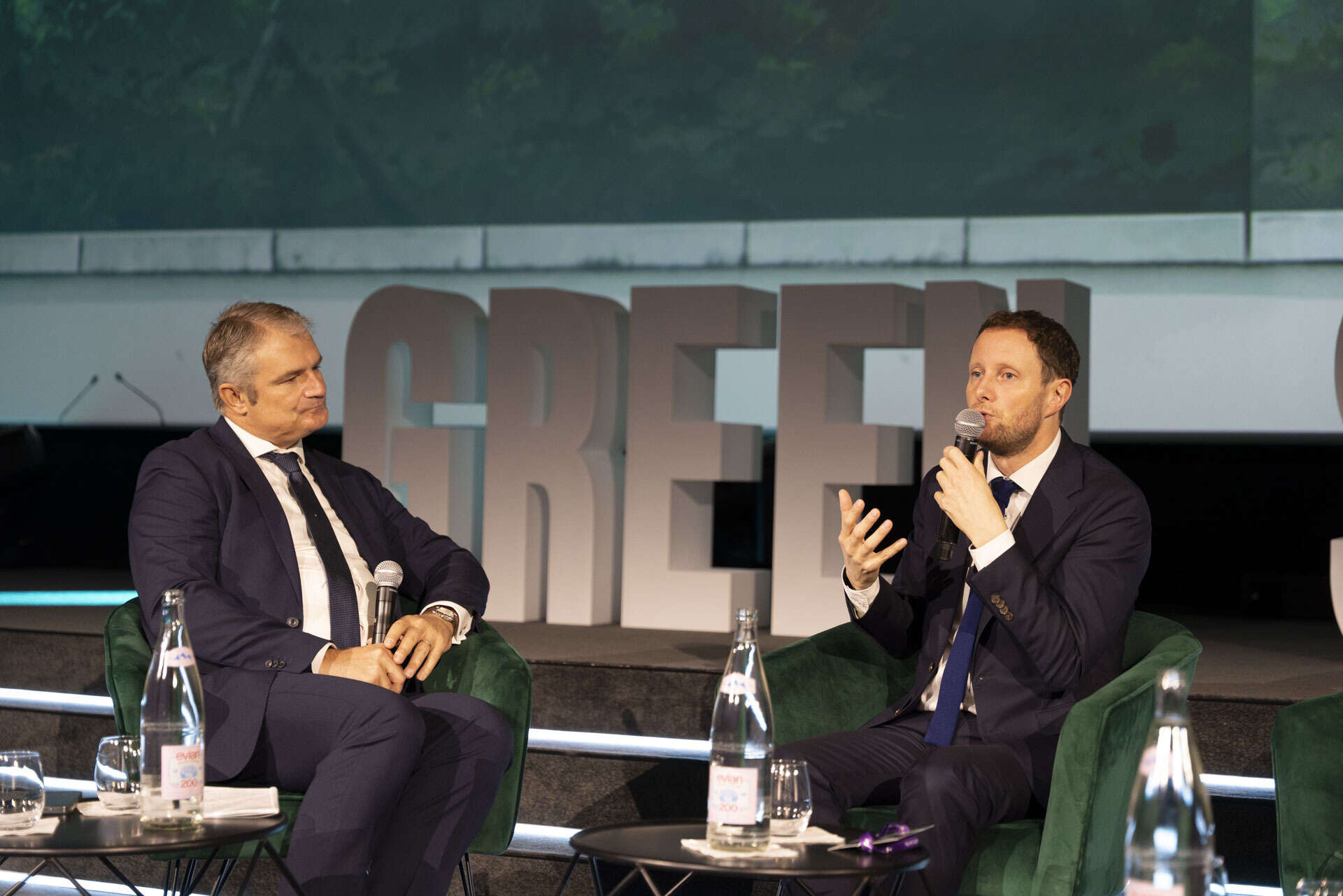

The event opened with a plenary session adressesing Sustainability and competing priorities with proeminent industry leaders.
Key insights from the session include:
- Sustainability is no longer a standalone commitment; it is a capability to embed in growth, resilience, competitiveness and security.
- Capital allocation: As risks increasingly compound, banks can help clients navigate competing priorities through informed choices, strategic investment and greater flexibility.
- Long-term planning: Uncertainty makes clear priorities and a steady direction—with room to adapt—all the more essential.
- Environmental security: Building environmental security means anticipating pressure on essential resources and developing more resilient systems.
- The 1.5°C ambition: A debate highlighted the tension between preserving a shared global reference point and focusing on credible, practical measures to accelerate climate action.
The Sustainability Interplay With Colliding Priorites
The rest of the day was structured around 6 verticals to address the sustainability interplay with colliding priorities.

Sustainability and Security Synergies in an Unstable Geopolitical Order
Global crises have shifted economies from openness to resilience, with nations and firms pursuing strategic autonomy and the derisking of their supply chain. Dependencies are mapped to reduce vulnerabilities while synergies between security and sustainability stand out.
Explore the vertical's sessions below, and click the button for our key takeaways on LinkedIn.

Made in, made with: when EU protectionism meets ESG
The EU responds to U.S. tariffs bullying and Chinese industrial dominance by pursuing strategic autonomy. The block seeks to reshore critical industries while imposing sustainability criteria on external competitors. Can ESG-grounded protectionism altogether support geopolitical derisking, reindustrialization and decarbonization?

Résilience des chaines d'approvision-nement des PME-ETI
Dans un environnement marqué par l’instabilité, les PME-ETI françaises sont confrontées à des risques accrus dans leurs approvisionnements (ruptures, prix volatils, dépendance fournisseurs, etc.). Face à ces enjeux autant opérationnels que stratégiques, explorons comment la relocalisation, la circularité et les alliances émergent comme des vecteurs de résilience et de compétitivité mais montrent aussi certaines limites, notamment de passage à l’échelle.

Armies Operations: at the Forefront of Emissions, at the Forefront of Adaptation
Climate change intensifies geopolitical tensions and disaster-response needs, while rearmament puts further pressure on carbon budgets. Though operational effectiveness remains paramount, resource constraints and climate hazards are reshaping defense—and driving resilience innovation. What can armies, civil society and industry learn from one another about resource efficiency, adaptation and scenario planning?

In the Eye of the Storm: The Necessary Reshuffling of Supply Chains
Supply chains are facing multiple disruption factors: Nature & Physical Risks, Regulatory developments, Geopolitical & trade tensions, Shortage of local capacities. This session intends to confront various perspectives and gain a comprehensive understanding of the supply chain “storm” with a specific focus of the sourcing of critical metals.

The Demand Side of Climate Action: mapping voters’ sentiments ahead of 2026-27 super election cycle
In a wave of elections in late 2026 and 2027, climate will become a key political issue amid overlapping crises. This non-partisan panel uses fresh polling to explore how voters and business leaders view climate action, how it interacts with cost-of-living concerns, and how attitudes differ across demographics.
Read our Summary on the Strategic Autonomy Vertical
"Strategic autonomy is now an important part of the resilience debate, particularly in Europe, where recent geopolitical and economic shocks have intensified efforts to rebuild domestic industrial capabilities. But the challenge is global.
The objective is not necessarily to produce everything domestically or eliminate international dependencies, but to understand which dependencies matter the most, to reshuffle supply chain strategies, secure critical capabilities, and build partnerships that strengthen the ability to withstand disruption and blackmail".
Quantifying Sustainability’s Value Drivers
Over the last decade, multiple attempts have been made by academics and practitioners to measure the value inherent in or created by sustainability. Consensus on value creation remains elusive, with financial markets largely sticking to traditional models.
However, existing sustainability-integrated valuation models can now be re-examined with new data sets (e.g. geospatial data) to better price costs, and decipher, test, and quantify sustainability's value creation and its broader role in business models.
Explore the vertical's sessions below, and click the button for our key takeaways on LinkedIn.

License to Operate & Business Impacts: New Learnings from the Data Center Industry?
Traditional high impact sectors have learnt, sometimes the hard way, how critical local "license to operate" may be, inviting them to strike the fine balance between community rights and strategic interests. Today, the datacenter industry is discovering similar challenges: NIMBYism and a new social merit order. This session delves into insights from social science and legal perspectives to examine with a key player in Europe how the sector, and its financiers, integrate local opposition / adoption into their strategies and investment valuations.

The ESG Valuation Lab: Experimenting Methodologies
Despite decade-long efforts to quantify sustainability value, financial markets remain anchored to traditional valuation methods. This interactive workshop explores three ESG integrated approaches through live financial modeling applied to a concrete case study: traditional methods with ad hoc ESG adjustments, advanced data-driven granular ESG integration, and integrated capital accounting framework expanding financial accounting by valuing human & natural capitals.

Connecting the Dots: Risk and Price Discovery through Geospatial Data
The session explores how geospatial data and analytics equip financial institutions and corporates to pinpoint, evaluate, and stress-test emerging climate and nature-related risks and vulnerabilities. The session also delves into the potential of nature-based solutions, whether applied to individual assets or local ecosystems, as robust risk mitigants and their integration into pricing frameworks

Transmission, levée de fonds, M&A : l’ESG dans les opérations stratégiques des PME-ETI
[Session in French]
Alors que 500 000 dirigeants partiront à la retraite dans les 10 prochaines années en France, les transmissions et restructurations capitalistiques interrogent la place donnée à l'ESG : non-sujet, exercice de conformité réglementaire ou véritable levier stratégique ? Cette session confronte l’expérience d’un investisseur et de dirigeants sur le rôle des critères ESG lors de successions, M&A et levées de fonds.

Next Level of Circularity: Scaling for Revenue, Not Just Waste Reduction
Circular economy has evolved from a sustainability issue to a strategic imperative for many sectors. Circular models offer resilient revenue streams beyond just waste reduction. While operational challenges persist, this session showcases successful case studies of two key archetypes: circular economy and functionality economy. Investors, alongside circular economy experts and company representatives, share their perspectives on value creation from these models, and on levers to scale up.
Adaptation and nature
Heightened natural hazards and mounting pressure on essential resources such as water and soil, driven by competing uses, are creating the need for new practices and solutions. Firms and public authorities are adapting infrastructures and logistics models to withstand rising risks, increasingly integrating circular and nature-based solutions.
New practices such as regenerative agriculture have been tested, but their scalability remains uncertain, while widening inequalities risk turning local crises into global disorders.
Explore the vertical's sessions below, and click the button for our key takeaways on LinkedIn.

From Soil to Health: Can Regenerative Agri Really Feed Us and Soils at Scale?
Rising health and food awareness is accelerating the shift from conventional to regenerative agriculture. This session will explore how these solutions can be scaled to address these issues and potential implementation. We will examine use cases from farm-to-fork, as well as the key investment drivers.

Beyond the Scenario: What Does Adaptation and Resilience Look Like in Action?
In a world where climate extremes are the new baseline, this session explores adaptation and resilience through concrete stories rather than models. Through experience sharing, speakers share how real-world adaptation strategies emerge in practice, how to assess risks, design and finance solutions, monitor performance and protect value.

Climate's Ripple Effect: Insurance, Social Vulnerability, and the Imperative for Adaptation
Europe faces escalating economic challenges from intensifying climate disasters. Beyond immediate damage, prolonged reconstruction strains insurers, making vulnerable regions potentially uninsurable and communities unprotected. This session examines these growing costs for territories, communities, and households, and explores adaptation tools. We will define vulnerability, review solutions, and discuss systemic risks before critical financial "trigger events."

L’eau dans les modèles d’affaires : vers la fin du rôle de figurant ?
[Session in French]
Pollution, raréfaction, catastrophe naturelle : le cinéma s’empare depuis longtemps des problématiques liées à l’eau dans des scénarios tantôt dystopiques, tantôt réalistes. Les enjeux sont connus, les effets visibles par tous. Pourtant, les entreprises tardent parfois à l’appréhender comme un enjeu stratégique.
Composing with and Leveraging on Sustainability
AI is set to become one of the most impactful technologies of the 21st century, with promises of enhanced productivity and analytical capacities. Yet its adoption brings sustainability challenges across all three ESG dimensions: environmental, through the physical footprint and resource intensity of its underlying infrastructure; social, through its impact on jobs, skills and labour markets; and governance, through the need to adapt decision-making and oversight to steer such a profound transformation in companies and wider societies.
Explore the vertical's sessions below, and click the button for our key takeaways on LinkedIn.

IA et emplois en PME-ETI : les nouveaux Temps Modernes
[Session in French]
Big bang ou révolution tranquille ? L'IA s'impose comme un impératif de compétitivité pour les PME-ETI mais beaucoup peinent encore à l’adopter. Au-delà des enjeux technologiques et business, l’IA redessine le travail et challenge la gestion RH : comment les dirigeants doivent-ils repenser leurs recrutements, formations, organisation du travail et le sens du collectif - aujourd'hui et pour demain?

In the Spotlight: Can We Build a Frugal and Sustainable AI?
AI is in the spotlight due to its exponential growth, leading to a surge in resource consumption and potential conflict of usage over them. Is it possible to develop frugal AI, where its positive impacts outweigh its costs? We will discuss how we can harness the potential of AI with responsibility, both from a model design and end-use perspective.

Living in Science Fiction: How will AI Impact our Organizations and Governance Models?
Is science fiction becoming our new corporate reality? This session will explore how AI is redefining workplace collaboration and decision-making. We will navigate this uncharted territory where creative destruction meets corporate governance and assess boards' readiness to lead in this new environment.
Let’s confront ourselves with the existential question: what happens to humans when machines can think, decide, and act?

Data Center Financing: Screening for Sustainability Issues
Embark on a critical exploration of data centers, confronting the realities of resource overconsumption and its profound environmental impacts. This session delves into the significant risks faced, alongside best practices for selection criteria and operational efficiency. These include practical mitigation strategies, sustainable investment approaches and the highlighting the value add of sustainable finance in enabling a responsible and resilient data center future.
Read our Summary on the AI Vertical
"Is the rapid expansion of artificial intelligence compatible with environmental and social concerns? With major model providers reporting that their active user base had tripled and their revenue had increased fivefold over the past year, the question was high on the agenda at the 2026 Natixis CIB Green Summit, featuring several panel discussions.
This surge in AI adoption is putting growing pressure on resources and raises broader societal concerns. Starting with energy: the IEA reports that data-center electricity consumption rose by 17% in 2025 - and by 50% among AI-focused hyperscalers. It projects that consumption will nearly double by 2030, reaching around 3% of global electricity demand."
Managing Energy Transition Complexity
In a world where decarbonization is shaped less by neat “net zero” roadmaps than by headwinds—volatile energy markets, evolving technologies, contested social narratives and uneven policies—we focused on the real-economy mechanics of transition. We explored how investors and corporates could operationalize decarbonization across sectors and value chains, moving beyond targets and disclosure to manage a complex transformation that cuts emissions while delivering resilience, competitiveness and affordability.
Explore the vertical's sessions below, and click the button for our key takeaways on LinkedIn.

Scenario Lab: Seeking for Pragmatism and Exploring Beyond Climate
Usual science-based scenarios remain the primary guide for calibrating decarbonization pathways. However, many players are facing limitations when it comes to practical application to fit with realities. Drawing on various experiences , we will explore the design and implementation of alternative initiatives to guide strategies and steer transition.
Are they indeed more realistic? Do they keep the end game at sight?

SAF, Batteries, CCS, PVs, H2: Anatomy of an Uneven Start
A few years ago, SAF, CCS, and Hydrogen were expected to be revolutionary breakthroughs, yet their long-expected debut has been significantly delayed, unlike other technologies that have already gained traction, such as EVs or PVs. Why this disparity? Are certain technologies simply falling victim to systemic transition delays and challenges in political coordination, or are they merely unfulfilled promises? Our experts delve into the obstacles confronting these technologies and explore the solutions that offer a viable path to success.

Mission Credible - A Director’s Playbook: An Immersive Simulation on Credible Corporate Transition Plans
Step into Industrial Co's Extraordinary General Meeting crisis: their net-zero plan has failed, ESG ratings are plummeting, and the board must act. Through an immersive simulation, witness executives, consultants, and investors construct a credible transition plan that balances emissions reduction with competitiveness. Experience real-world decarbonization complexity - hard choices, practical solutions, go beyond neat roadmaps.

Energy Security - Watt’s at Stake: Electrification as a Geopolitical Shield
In 2026, energy security is yet again endangered due to geopolitical disorder. Countries, sectors and firms advanced in the “Electrotech” revolution seem better hedged against shortages or price hikes. The situations is highly differentited and contrasted worldwide.
Decision-makers from both the private and public sectors will share their experience in pursuing energy security, highlighting sectoral, geographical and market specificities.

Coal Phase-Out Delays: What Now?
The global consensus on fossil fuel phase-out faces geopolitical and demand-side complications. Pilot initiatives are encountering major obstacles, notably in the name of energy security and through shifts in local policies. This session examines responsible phase-out frameworks versus implementation realities, discussing “pragmatic” hybrid solutions which may ensure reliable energy supply, but also entail carbon lock-in.
Read our Summary on the Decarbonization
"As the energy transition enters a more demanding phase, the direction of travel is clear, but delivering decarbonization at scale requires more than ambitious targets and promising technologies. Projects must become commercially viable, companies must translate commitments into credible transition plans, and policymakers and investors must navigate the tensions between climate objectives, energy security, industrial competitiveness and affordability.
These challenges shaped the discussions of the "decarbonization” vertical thematic at Green Summit 2026, where industry leaders, financial institutions, sustainability experts and policymakers explored what it will take to move from transition ambition to measurable progress. Across sessions covering sustainable aviation fuel (SAF), batteries, carbon capture and hydrogen, corporate transition planning, coal phase-out and electrification, a common message emerged: there is no single pathway to decarbonization."
A Toolkit Supporting the Sustainability Interplay
Sustainable finance is at a critical juncture, moving beyond ESG enthusiasm to confront complex realities. Backlash, geopolitical shifts, and regulatory divergence are reshaping the sector, and will after its shape, form, products, necessary skills, and role in the coming decade. Real economy decarbonization efforts test the depth of commitments, and sustainability-linked instruments face scrutiny for impact and complexity.
Private markets, while essential, are constrained for climate finance. The urgent need for credible investable transition pathways will require sustainable finance to focus on delivering measurable impact, restoring trust, and enabling real economy transformation.
Explore the vertical's sessions below, and click the button for our key takeaways on LinkedIn.

The Sustainability Ecosystem: What's My Role in 2030?
What is the future for ESG experts? As sustainability becomes mainstream, the role of the specialist is at a crossroads. Join this interactive "Lab of Ideas" designed for sustainability professionals to debate their evolving purpose, navigate new career pressures, and collectively define what it means to be a leader in the sustainable economy of 2030.

“Sustainability-Linked” instruments: Stop or Go? What's Next?
After rapid early growth, Sustainability-Linked Instruments (SLIs) faced turbulence. This session delves into their complex realities, focusing on genuine value in fostering dialogue, supporting sustainability journeys, and enabling performance monitoring. It confronts challenges like complexity and penalties, seeking a balanced perspective on SLLs' ongoing evolution.

EU regulations & Sustainability post Omnibus: Retreat or Maturity?
Despite Omnibus rollbacks on transparency, banking supervision and the upcoming SFDR 2.0 continue to push sustainability-oriented capital allocation. As EU regulation shifts toward industry and trade through NZIA, IAA and CBAM, this panel explored sustainable finance’s direction and its links to EU sovereignty and sustainability policies.

Private Markets and Transition: Aligning Sponsors, LPs and Regulatory Frameworks on a Changing Stage
This panel discussed the specific context of climate transition thematics in private markets, the related application of sustainable finance regulations and other frameworks, and the challenges presented by diverging reporting and strategic requirements of LPs.

From Script to Screen: Aligning Transition Blueprints with Investors Appetite for Transition Labelled Instruments
The launch of ICMA’s Climate Transition Bond Guidelines and LMA/LSTA/APLMA Transition Loan Principles finally set the scene. Moving forward, the operational challenge lies in translating this theory into practice. Apart from solving the supply side of the equation, the success of these instruments hinges on the buy-side: meeting investor requirements to fuel their appetite.
Arts & Experiences
Natixis CIB’s Green & Sustainable Hub has long believed in the power of art and alternative narratives to raise awareness and drive change.
Previous Green Summits featured a range of artistic initiatives, from performing arts such as improvisation and theatre to visual arts.
In 2026, the Green Summit partnered with prestigious institutions to celebrate film and create thought-provoking experiences exploring new dimensions of sustainability. The programme included inspiring creative-writing sessions, a curated selection of short films and experimental art, and more.
Short Film Screenings
Short Film Screenings
The event was the occasion to discover a carefully curated selection of thematic short film screenings, exploring the key themes of the Green Summit. From experimental and documentary works to comedies and science-fiction — featuring both acclaimed filmmakers and emerging talent from a French cinema school.
Writing Workshop
Writing Workshop
A 30-minute, high-energy writing workshop with professional screenwriters and actors.
Imagine a world beyond today’s paradigm—not a utopia or an apocalypse. The ideas generated during the workshop could become movie trailers, screened live at the Green Summit’s closing event.
Immersive Experience
La Croix Rouge's Immersive Experience
This workshop invited the audience into an immersive experience of the first hours of a total digital blackout: from initial disorientation to collective rebuilding, moving through the discovery of our hidden vulnerabilities along the way. An invitation to rethink our relationship with technology and to uncover our capacity for collective resilience in the face of the unexpected.
Keynote on cinema
Can Cinema Change the World?
As Editorial Director of The Shift Project, Emma Stokking examined how films and TV series shape our collective imagination and influence our lifestyles.
Drawing on Hollywood blockbusters to everyday television, she offered fresh perspectives on storytelling’s power to inspire critical thinking and accelerate the transition.
Improvisation Cabaret
“BLACKOUT"
The future doesn’t always go according to plan. With humor and improvisation, the Eux Theater Company invites the audience to observe, adapt and, above all, keep the story moving.
Short Film Award
Short Film Award
A selection of graduation short films from La Fémis were screened at the Green Summit 2026. Reflecting a new generation of filmmakers, these films will offer inspiring perspectives on today’s world and Sustainability matters.
The films were submitted to a public vote for an award, thereby celebrating the creativity, innovation, and power of the stories that are shaping the cinema of tomorrow.
WATCH THE WINNING FILM HERE
